

In the world of military and defense technology, ordinary just doesn’t cut it. The harsh realities of combat zones, extreme weather conditions, and high-stakes operations demand extraordinary engineering solutions. This is where the art and science of designing for extreme environments comes into play.
From scorching deserts to frigid arctic tundras, from the depths of the ocean to the vacuum of space, military equipment must perform flawlessly under the most challenging conditions imaginable. The engineering considerations for these military-grade parts go far beyond what’s required for civilian applications. Let’s dive into the fascinating world of extreme environment engineering and explore the cutting-edge technologies that keep our armed forces equipped and ready for anything.
The Challenges of Extreme Environments
Extreme environments present a multitude of challenges for engineers. These can include temperature extremes, high pressure or vacuum conditions, corrosive substances, high-impact forces, and radiation exposure. Each of these factors can wreak havoc on standard materials and components. A plastic that performs well at room temperature might become brittle in arctic conditions or melt in desert heat. Electronics that function perfectly on the ground may fail when exposed to the intense radiation of outer space.

Source: Pexels
To overcome these challenges, engineers must employ a combination of advanced materials, innovative designs, and rigorous testing procedures. Let’s explore some of the key considerations in designing military-grade parts for extreme environments.
Materials Science: The Foundation of Extreme Engineering
At the heart of extreme environment engineering lies materials science. The choice of materials can make or break a design. In recent years, advances in polymer science and metal alloy development have opened up new possibilities for creating components that can withstand extreme conditions.
High-performance polymers like PEEK (Polyether Ether Ketone) and PEI (Polyetherimide) have become go-to materials for many military applications. These thermoplastics offer an exceptional combination of strength, heat resistance, and chemical stability. For instance, PEEK can maintain its mechanical properties at temperatures up to 250°C (482°F), making it suitable for use in aircraft engines and other high-temperature environments.
In the realm of metals, advanced processing techniques have led to the development of materials with unprecedented properties. For example, nanostructured metals created through severe plastic deformation can exhibit extraordinary strength and toughness. These materials could potentially be used in armor applications, offering superior protection at reduced weight compared to traditional steel armor.
Precision Engineering: Tolerances in Extreme Conditions
When designing parts for extreme environments, precision becomes more critical than ever. Thermal expansion and contraction can cause significant dimensional changes in materials, potentially leading to component failure. Engineers must account for these factors in their designs, often using sophisticated computer models to simulate how parts will behave under various conditions.
For example, in the design of a military aircraft’s landing gear, engineers must consider how the metal components will expand when heated by friction during landing. They must also account for the extreme cold experienced at high altitudes. Failure to properly account for these thermal effects could result in jammed mechanisms or structural failures.
In submarine design, precision engineering takes on a whole new dimension. The pressure differences between surface operation and deep-sea diving can cause significant deformation of the hull. Engineers must design the structure to maintain its integrity under these varying conditions, accounting for the compression of materials at extreme depths and ensuring that all seals and joints remain watertight despite the changes in pressure and temperature.
Impact Resistance: Designing for Survivability
Military equipment must be able to withstand significant physical impacts, whether from enemy fire, rough terrain, or accidental drops. Designing for impact resistance involves careful material selection, structural analysis, and innovative shock-absorption techniques.
One advanced technology in this field is the use of shear thickening fluids (STFs). These non-Newtonian fluids exhibit increased viscosity when subjected to sudden stress. When incorporated into composite materials, STFs can provide exceptional impact resistance. For example, body armor incorporating STFs can remain flexible for normal movement but instantly stiffen upon impact, providing superior protection against bullets or shrapnel.
Another cutting-edge approach is the use of metamaterials – engineered materials with properties not found in nature. Some metamaterials can redirect stress waves, effectively “cloaking” an object from the effects of an impact. This redirection of stress waves can significantly reduce the damage caused by impacts, potentially increasing the survivability of both equipment and personnel. For instance, a vehicle equipped with metamaterial armor could better withstand explosive blasts by redirecting the shock waves around the vehicle rather than absorbing them directly.
Radiation Hardening: Preparing for the Worst
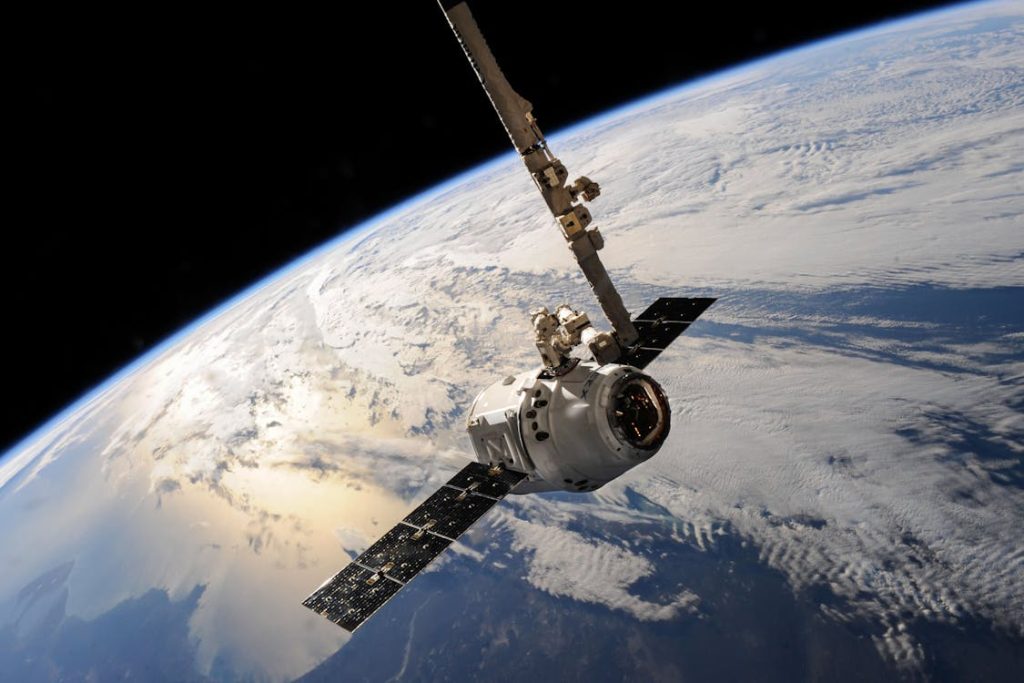
In certain military applications, particularly in space-based systems or nuclear scenarios, radiation exposure is a significant concern. Radiation can cause a variety of issues, from gradual degradation of materials to sudden failures in electronic systems.
One advanced technique for radiation hardening is the use of silicon-on-insulator (SOI) technology in microelectronics. SOI chips have a layer of insulating material (usually silicon dioxide) beneath the active layer of silicon, which helps to prevent radiation-induced errors. This technology is widely used in satellite systems and other high-radiation environments.
For optical components, cerium-doped glasses are being developed that can maintain clarity even after exposure to high levels of radiation. These glasses could be crucial for maintaining visibility in nuclear submarines or space-based surveillance systems.
Source: Pexels
Testing and Validation: Simulating Extreme Conditions
Designing for extreme environments is only half the battle. Rigorous testing and validation procedures are essential to ensure that military-grade parts will perform as expected when it matters most. This often involves subjecting components and systems to conditions even more extreme than they’re likely to encounter in real-world use.
One advanced testing method is the use of combined environment testing chambers. These chambers can simultaneously simulate multiple extreme conditions – for example, high temperature, low pressure, and intense vibration – to more accurately replicate real-world scenarios. This allows engineers to identify potential failure modes that might not be apparent when testing for each condition separately.
Another cutting-edge approach is the use of digital twins in testing. A digital twin is a virtual replica of a physical product that can be used to simulate its performance under various conditions. By combining real-world test data with advanced simulation algorithms, engineers can predict how a component will perform over its entire lifecycle, even in scenarios that would be impractical or impossible to test physically.
Testing and Validation: Specialized Testing for Unique Environments
Testing equipment for undersea use presents unique challenges. Pressure chambers are used to simulate deep-ocean conditions, subjecting components to pressures equivalent to thousands of meters of water depth. Salt spray chambers accelerate corrosion testing, allowing engineers to evaluate years of wear in a matter of weeks.
For aerospace applications, thermal vacuum chambers are used to simulate the conditions of outer space. These chambers can replicate the extreme temperature swings and vacuum conditions experienced by satellites and spacecraft, allowing engineers to verify that components will function properly in orbit.
Ballistics testing is crucial for armor and other protective systems. Sophisticated ranges use high-speed cameras and sensors to analyze the performance of materials under various threat scenarios. This data is then fed back into the design process, allowing for continuous improvement of protective systems.
A Holistic Approach to Extreme Environment Engineering
As we look to the future, the demands placed on military equipment are only likely to increase. Climate change may lead to more extreme weather conditions, while advancements in weapon technologies will require even greater levels of protection and performance. The field of extreme environment engineering will undoubtedly continue to evolve, driven by the never-ending quest to provide our armed forces with the best possible equipment to carry out their critical missions.
For those involved in the development of military and defense technologies, partnering with experienced manufacturers who understand the unique challenges of extreme environment engineering is crucial. PTI Tech and Polmold offer new and experienced product owners’ access to a competent design team, sophisticated molding machines, and specialty-engineered materials.
Stop guessing: request a quote today and bring that idea to life. We’ll provide the answers to all your questions. PTI Tech will work with you to define your project needs and streamline the manufacturing process to allow you to cut down on unnecessary costs and production delays.