

In the high-stakes world of defense and military manufacturing, the longevity and performance of tooling can make or break mission-critical operations. As equipment demands intensify, innovative solutions to extend the lifespan of vital manufacturing tools become paramount. This is where the intersection of advanced material science and precision engineering offers game-changing possibilities for the defense sector.
The Critical Role of Tooling in Defense Manufacturing
Military-grade components face unforgiving conditions, and the tooling used to create these components endures similarly harsh demands during manufacturing. Injection molding tools for protective gear must maintain precise tolerances despite repeated exposure to punishing temperatures and pressures. Metal injection molding (MIM) tools for firearm parts confront even greater challenges, with abrasive metal powders and intense processing conditions threatening premature wear.
Advanced Materials: Pushing the Boundaries of Aerospace Tooling
In the realm of aerospace tooling, material selection can mean the difference between a component that fails mid-flight and one that performs flawlessly under extreme conditions. Consider the challenge of creating molds for turbine blade production:
Powder metallurgy tool steels offer a compelling solution for aerospace tooling. These advanced materials, created through a process of atomizing molten metal into fine powders before compacting and sintering, combine heat resistance with improved machinability, allowing for more complex mold geometries and longer-lasting tools.
For instance, a powder metallurgy steel like Crucible Industries’ CPM 9V excels in hot work applications. Its unique composition, rich in vanadium carbides, provides:
- Superior wear resistance, extending mold life for abrasive composite materials.
- Excellent hot hardness, maintaining integrity when processing high-temperature alloys.
- Improved thermal fatigue resistance, crucial for repeated heating and cooling cycles.
By leveraging these advanced materials, aerospace manufacturers can create tooling that survives rigorous production while maintaining tighter tolerances over extended runs.
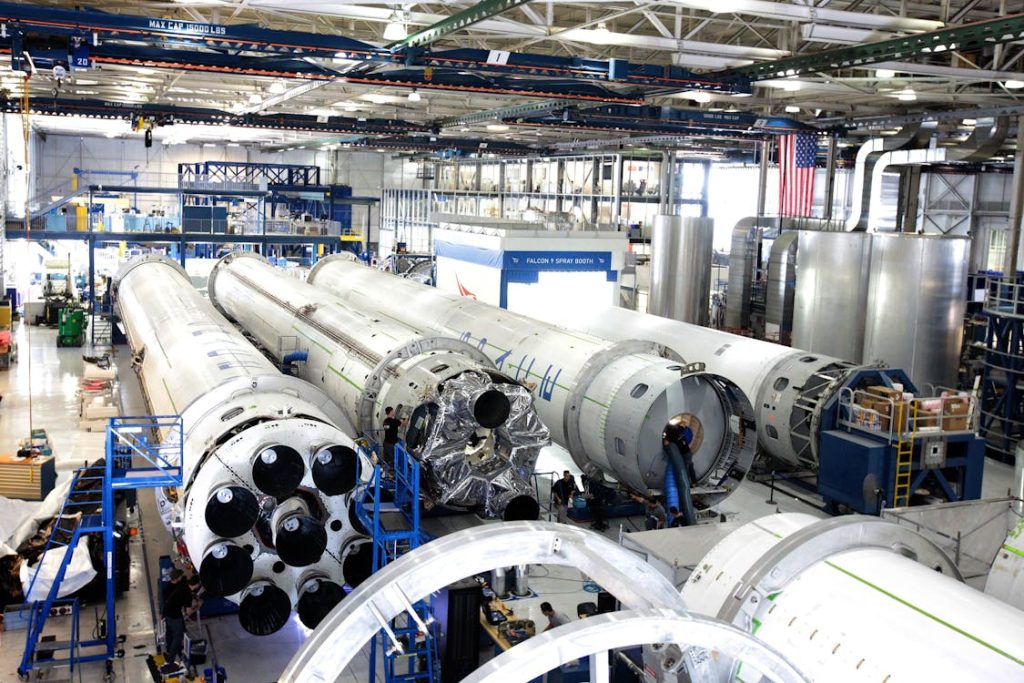
A rocket factory. Source: Pixabay
Surface Engineering: Enhancing Tooling Performance in Real-World Applications
Surface engineering techniques offer a powerful way to enhance tooling performance, particularly in challenging defense applications. Let’s explore how these innovations translate to tangible benefits on the production floor:
Physical Vapor Deposition (PVD) coatings can dramatically extend the life of injection molds used in producing ballistic helmet shells. By applying a thin layer of titanium aluminum nitride (TiAlN) to the mold surface:
- Abrasion resistance increases significantly, withstanding wear from glass-fiber reinforced polymers.
- The coating’s low friction coefficient reduces ejection force, minimizing stress on molds and components.
- Enhanced heat resistance allows for higher processing temperatures, potentially improving helmet shell properties.
In practical terms, this means a single mold can produce thousands more helmet shells before requiring maintenance, ensuring consistent quality and reducing production bottlenecks.
Plasma nitriding offers unique advantages for large-scale tooling used in military vehicle production. This process diffuses nitrogen into the tool steel surface, creating a hardened layer that’s integral to the base material. At a molecular level, the nitrogen atoms occupy interstitial spaces in the steel’s crystal structure, creating a supersaturated solid solution that significantly enhances surface properties.
For molds used in forming armored vehicle panels, plasma nitriding provides:
- Dramatically improved wear resistance, maintaining crisp detail and tight tolerances.
- Increased corrosion resistance, protecting against degradation from aggressive polymers or cleaning agents.
- A deeper hardened layer than traditional coatings, allowing for minor surface refinishing.
By implementing plasma nitriding, manufacturers have seen tool life extensions of 300% or more in some applications, significantly reducing mold replacements or repairs.
Predictive Maintenance and Smart Tooling: A Data-Driven Approach
The integration of sensors and analytics into tooling systems is revolutionizing maintenance practices in defense manufacturing. Modern predictive maintenance platforms transform data into actionable insights that can dramatically extend tooling lifespan.
Consider a scenario where a manufacturer is producing munition components using a multi-cavity mold. By implementing a smart tooling system:
- Embedded pressure sensors in each cavity provide real-time data on material flow and compaction.
- Thermal imaging cameras monitor heat distribution across the mold surface.
- Accelerometers detect minute vibrations that could indicate developing issues.
This data is then fed into an analytics platform, which uses machine learning algorithms to identify patterns and anomalies. The system might:
- Detect a gradual increase in cavity pressure, indicating potential wear or material buildup.
- Identify subtle changes in thermal patterns that suggest a developing hotspot.
- Correlate specific vibration signatures with known issues, allowing for early intervention.
By analyzing these trends over time, the system can predict when specific components of the tooling are likely to require maintenance or replacement. This allows manufacturers to:
- Schedule maintenance during planned downtime, minimizing production disruptions.
- Order replacement parts or prepare repair equipment in advance, reducing lead times.
- Optimize processing parameters in real-time to extend tool life without compromising part quality.
In practice, this data-driven approach has enabled some defense manufacturers to reduce unplanned downtime by up to 50% while extending overall tooling lifespan by 25% or more.

A barometer. Source: Pixabay
Innovative Solutions for Complex Manufacturing Challenges
The principles and technologies discussed can be applied in various ways to address specific manufacturing challenges in the defense sector. For instance, if a customer struggles with wear on mold inserts, a multi-faceted approach might include:
- Material Upgrade: Switching to a powder metallurgy grade with higher wear resistance and better thermal properties.
- Surface Treatment: Applying a specialized PVD coating to reduce friction and improve release characteristics.
- Design Optimization: Utilizing CFD simulations to redesign gating and venting, reducing wear-inducing turbulence during mold filling.
- Modular Construction: Implementing a segmented design where high-wear areas are isolated in easily replaceable inserts, allowing for quick and cost-effective maintenance.
- Smart Monitoring: Integrating pressure and temperature sensors to provide real-time feedback, enabling precise control of molding parameters and early detection of potential issues.
Modular and Segmented Tooling: A Game-Changing Approach
Instead of constructing molds as single, monolithic units, advanced designs incorporate replaceable inserts for high-wear areas. This approach offers several advantages:
- Only the worn sections need replacement, significantly reducing maintenance costs and downtime.
- Different materials or coatings can be used for specific insert areas, optimizing performance.
- Faster turnaround for design iterations or repairs.
By combining these innovations, manufacturers can create tooling solutions that not only resolve immediate production challenges but also provide a foundation for long-term efficiency and quality improvements.
Partnering for Success in Defense Manufacturing
The quest for maximizing tooling lifespan in defense manufacturing is an ongoing challenge, requiring a combination of advanced materials, innovative design, and specialized expertise. By embracing these cutting-edge approaches, manufacturers can ensure their tooling keeps pace with the ever-increasing demands of modern military and defense applications.
For those seeking to push the boundaries of tooling performance and longevity, partnering with experienced specialists in precision manufacturing and advanced materials is crucial. With over three decades of experience supporting the US aerospace, defense, medical, and industrial sectors, PTI Tech and Polmold stand ready to tackle the most demanding tooling challenges.
From material selection and custom formulation to innovative mold design and precision maintenance, PTI Tech’s comprehensive capabilities ensure that your defense manufacturing tooling not only meets today’s stringent requirements but is prepared for the challenges of tomorrow.
To learn more about how advanced material science and precision engineering can extend the lifespan of your critical manufacturing tooling, reach out to the experts at PTI Tech. Together, we can develop solutions that keep your defense production at the forefront of innovation and reliability.