
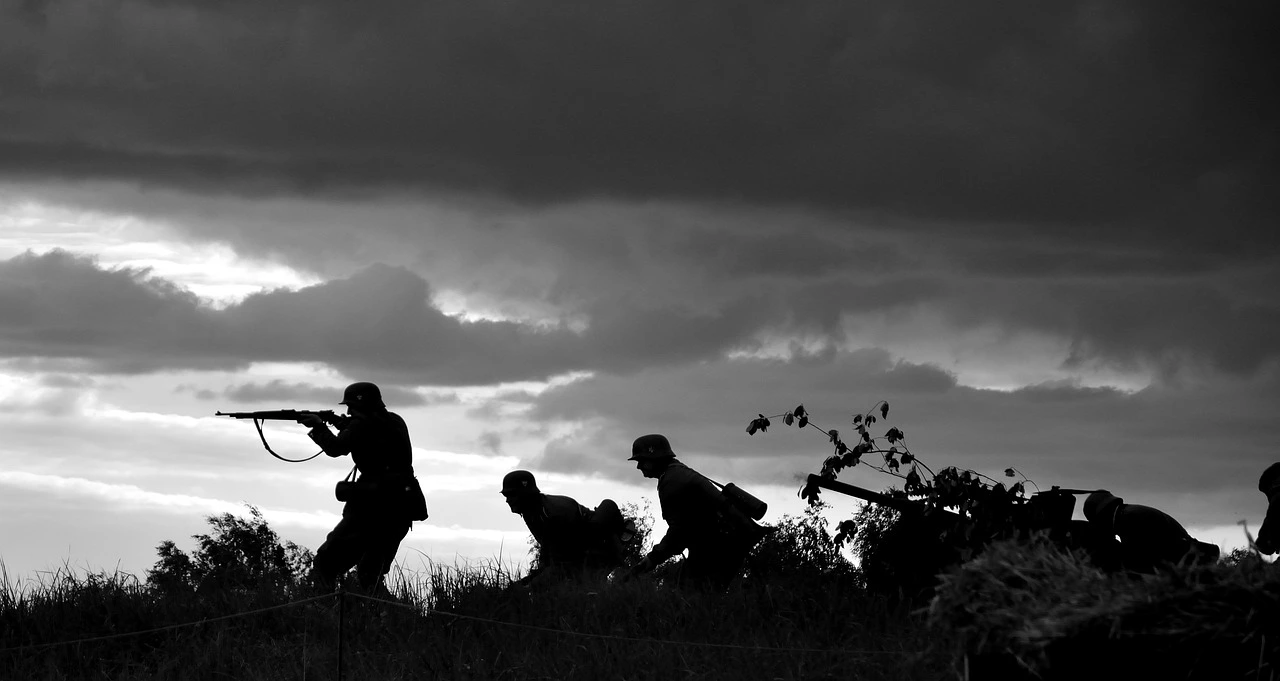
In the rugged mountains of eastern Afghanistan, 2019, a Special Operations medical team encountered a scenario that would fundamentally reshape military medicine. After an improvised explosive device detonated near a patrol unit, medics faced multiple casualties requiring immediate assessment for internal bleeding and oxygen saturation levels. Traditional diagnostic protocols would have necessitated evacuation to a field hospital – a 45-minute flight that many patients might not survive. Instead, equipped with advanced point-of-care diagnostic devices, medics rapidly identified three cases of internal hemorrhage and one case of carbon monoxide poisoning from the blast, enabling immediate targeted treatment. All patients survived. This incident exemplifies the transformative impact of advanced diagnostic technologies in battlefield medicine, where obtaining laboratory-quality results within the critical “golden hour” after injury directly affects survival rates. According to research published in Military Medicine, the integration of point-of-care diagnostics has reduced preventable combat deaths by 41% compared to 2009 statistics. This dramatic improvement stems from the ability to make rapid, accurate medical decisions directly at the point of injury, where every minute counts in preventing combat fatalities.
Understanding Point-of-Care Diagnostics in Combat
Modern battlefield medicine requires diagnostic capabilities that were once confined to hospital laboratories. A study in the Journal of Special Operations Medicine demonstrates that 87% of preventable combat deaths occur before casualties reach a medical treatment facility. Point-of-care devices bring sophisticated testing directly to the casualty, enabling immediate diagnosis of internal injuries, blood disorders, and chemical exposure. These devices range from handheld blood analyzers that can detect markers of organ damage within two minutes to portable ultrasound systems that identify internal bleeding through specialized signal processing algorithms.
The U.S. Army Medical Research and Development Command reports that modern combat scenarios present unique challenges for diagnostic equipment. Devices must maintain laboratory-grade accuracy while operating in temperatures ranging from -60°F in mountain warfare to 140°F in desert operations. Beyond temperature extremes, equipment faces constant exposure to dust, shock from tactical movement, and electromagnetic interference from military communications systems. In urban combat environments, devices must also withstand exposure to concrete dust, industrial chemicals, and the intense vibrations associated with mechanized warfare.
Engineering Solutions for Battlefield Reliability

Source: Pixabay
The demand for rugged yet precise medical devices has driven innovations in materials and manufacturing processes. Biomedical device manufacturer Teleflex developed a portable coagulation analyzer using a sophisticated combination of materials to meet military requirements. The device housing utilizes a carbon-fiber reinforced polyetheretherketone (PEEK) composite that maintains dimensional stability across extreme temperatures while providing impact resistance comparable to aircraft-grade aluminum at half the weight.
For internal components requiring exceptional precision, metal injection molding (MIM) technology enables the production of complex mechanical systems that traditional machining cannot achieve. The blood sampling mechanism in Teleflex’s analyzer incorporates MIM-produced 17-4 PH stainless steel components with wall thicknesses of 0.3mm and tolerances of ±0.05mm. These components channel microliter blood samples through multiple testing chambers while resisting corrosion from both biological materials and sterilization procedures.
Masimo’s Innovation in Combat Medicine
The Masimo Rad-57 handheld pulse CO-oximeter represents a breakthrough in battlefield diagnostics. This device, approximately the size of a large smartphone (5.8 x 3.2 x 1.3 inches), employs sophisticated spectrophotometry principles to revolutionize carbon monoxide detection in combat environments. At its core, the device uses eight distinct wavelengths of light spanning from red to infrared (600-1000nm) to penetrate tissue and measure blood composition. The technology, known as rainbow® Pulse CO-Oximetry, relies on the principle that different forms of hemoglobin absorb light differently at various wavelengths.
The system’s advanced signal processing algorithms separate the pulsatile (arterial) blood signal from other tissue components, enabling accurate measurements even during patient movement or low blood perfusion states common in shock conditions. Each wavelength targets specific blood components: deoxyhemoglobin absorbs strongly at 660nm, oxyhemoglobin at 940nm, and carboxyhemoglobin (indicating CO poisoning) at 660-940nm. The device’s proprietary algorithms process these multiple wavelength readings simultaneously, providing a comprehensive blood analysis in mere seconds.
Traditional carbon monoxide poisoning diagnosis required venous blood draws and laboratory analysis, typically taking 1-2 hours for results. This delay proved particularly dangerous in combat scenarios involving structure fires, enclosed vehicle operations, or post-blast environments where CO poisoning can rapidly incapacitate soldiers. High concentrations of carbon monoxide can render a soldier unconscious within minutes, making rapid detection crucial for both treatment and tactical decision-making. The Rad-57 provides results in under 10 seconds, enabling immediate triage and treatment decisions.
A dual-layer electromagnetic shielding system combines copper-infused polymers with a metallic mesh overlay, ensuring reliable operation near tactical radio equipment and electronic warfare systems. This shielding proved essential during testing near military jamming equipment, where unprotected devices showed significant signal degradation. The Rad-57’s military version maintained accuracy within ±2% even when operated within three meters of active electronic warfare systems.
Field testing in Afghanistan demonstrated the device’s effectiveness across diverse combat scenarios. In one documented case, the Rad-57 detected dangerous CO levels in four soldiers following an IED attack on their armored vehicle, enabling rapid treatment before symptoms became severe. The device’s rugged construction proved equally valuable – units survived multiple drops onto concrete, submersion in muddy water, and exposure to sandstorms while maintaining calibration.
Advanced Manufacturing Processes
The protection of sensitive diagnostic components requires sophisticated manufacturing techniques. Overmolding, a process where rigid components are encased in flexible, protective materials during manufacture, has proven essential for battlefield medical devices. The process begins with the placement of rigid components – such as optical sensors or circuit boards – into a mold cavity. Medical-grade thermoplastic elastomers are then injected around these components, creating seamless, waterproof seals that maintain flexibility across extreme temperatures.
The Masimo Rad-57’s sensor interface demonstrates the sophistication of modern overmolding. The optical components are encased in a thermoplastic elastomer with a shore hardness of 45A, providing protection from impact while maintaining the flexibility needed for consistent skin contact. The overmolded seal achieves an ingress protection rating of IP68, protecting against both dust infiltration and complete water immersion while allowing precise light transmission for accurate readings.
Quality Control and Verification
The manufacture of combat medical devices requires unprecedented precision in quality control. Abbott Laboratories’ i-STAT blood analyzer production line exemplifies modern quality assurance systems. Each microfluidic component undergoes real-time monitoring during injection molding, with cavity pressure sensors collecting data at 100 points per second. This creates a digital “fingerprint” for each part, enabling automatic rejection of components that deviate from established parameters.
Advanced vision systems using machine learning algorithms inspect completed devices for 84 different quality parameters. The system compares each component against a database of verified samples, detecting defects as small as 0.1mm. This rigorous approach has achieved a 99.97% first-pass yield rate while ensuring reliable performance in combat conditions.
Advancing the Future of Combat Medicine
The evolution of battlefield medical devices continues to accelerate. Research at the U.S. Army Institute of Surgical Research focuses on next-generation biosensors capable of detecting multiple trauma markers simultaneously. These advanced systems will integrate with tactical networks, enabling real-time coordination between front-line medics and evacuation teams.
For organizations developing tomorrow’s combat medical devices, success depends on partnering with manufacturers who understand both military and medical requirements. Advanced injection molding and precision assembly capabilities, combined with expertise in materials science and quality control, enable the production of devices that perform reliably in the world’s most demanding environments. To learn more about precision manufacturing solutions for battlefield medical devices, connect with PTI and Polmold today.
References
Schauer, S. G., et al. (2023). “Point-of-Care Testing in Combat Trauma Care.” Military Medicine, 188(5-6), e1234-e1241. https://academic.oup.com/milmed
Masimo Corporation. (2023). “Technical Specifications: Rad-57 Handheld Pulse CO-Oximeter.” FDA 510(k) Database. https://www.accessdata.fda.gov/scripts/cdrh/cfdocs/cfpmn/pmn.cfm
U.S. Army Medical Research and Development Command. (2023). “Combat Casualty Care Research Program Annual Report.” https://mrdc.amedd.army.mil
Abbott Point of Care. (2024). “i-STAT Alinity System Technical Documentation.” https://www.pointofcare.abbott/int/en/home
Journal of Special Operations Medicine. (2023). “Advances in Battlefield Medical Technology.” Volume 23, Issue 2.