The American manufacturing landscape is experiencing a transformation as integrated molding cells emerge as the cornerstone of next-generation production capabilities. As Industry 4.0 technologies consolidate with traditional injection molding operations, fully integrated work cells are redefining what’s possible in terms of efficiency, quality, and flexibility. As 83% of manufacturers believe smart factories will transform production within five years, the question is no longer whether to embrace integrated molding cells but rather how quickly manufacturers can implement these systems to remain competitive in the global marketplace. [1]
Understanding Integrated Molding Cells
Integrated molding cells represent an advancement from traditional standalone injection molding operations. These systems seamlessly connect injection molding machines (IMMs) with auxiliary equipment, robotics, quality control systems, and enterprise management platforms into cohesive, digitally networked production units. Fully integrated injection molding work cells allow IMMs and auxiliary equipment to communicate smoothly, giving operators insight into real-time process parameters.
The architecture of modern integrated cells extends far beyond simple machine-to-machine communication. At the heart of these systems lies Manufacturing Execution Systems (MES), specifically designed for plastics production. The Arburg host computer system (ALS), for instance, serves as the central element where entire plastic parts production can be digitally planned and controlled, with all relevant information tracked in real-time.
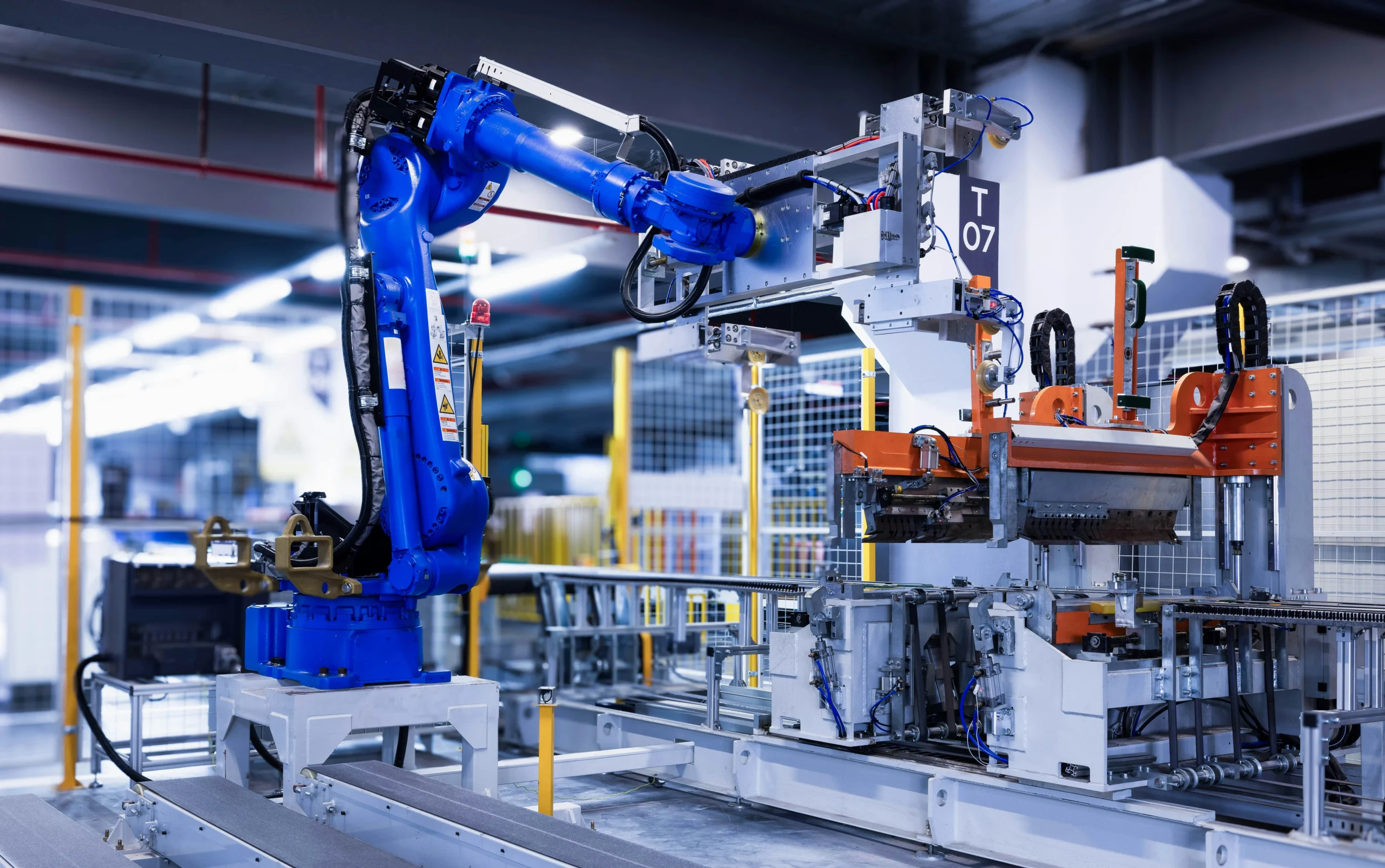
These cells incorporate multiple advanced technologies working in concert: IoT sensors for real-time data collection, automated material handling systems, quality inspection equipment, robotics for part removal and secondary operations, and centralized control systems that orchestrate all activities. The digital thread connecting these elements enables unprecedented levels of coordination and optimization that were impossible with traditional manufacturing approaches.
The Industry 4.0 Foundation
The transformation toward integrated molding cells is inextricably linked to Industry 4.0 principles that emphasize connectivity, data analytics, and intelligent automation. Industry 4.0 encompasses several key technologies, including the Internet of Things (IoT), artificial intelligence (AI), big data analytics, robotics, and cyber-physical systems that work together to create networked manufacturing environments where machines, systems, and humans communicate and collaborate in real-time.
The implementation of standardized communication protocols has been critical to enabling seamless integration. The European machinery industry organization Euromap publishes Industry 4.0 protocols that OEMs of injection molding machines and auxiliary equipment follow to establish standards for signals and data transfer. These protocols include Euromap 82.1 for temperature control devices, Euromap 82.2 for hot runner devices, and Euromap 82.3 for liquid silicone rubber dosing systems, ensuring compatibility across equipment from different manufacturers. [1]
Real-time monitoring with strategically placed sensors and IoT devices collects comprehensive process and material performance data throughout the molding cycle. This data feeds advanced analytics platforms that identify optimization opportunities, predict maintenance needs, and detect quality issues before they result in defective parts. The shift to cloud-based solutions enables factories to share information instantly between different parts of the business, providing managers with comprehensive visibility into operations across multiple locations.
Current State of Implementation in the United States
While the vision of fully integrated smart factories is compelling, the current state of implementation in the United States requires more nuance; as even with progress , widespread adoption faces several challenges. There are still a few injection molders in the U.S. that are fully integrated and data-driven from order to manufacturing, with implementation by end users not yet completely taking off despite strong interest in the technology.
Several factors contribute to this slower paced of adoption of fully integrated smart factories. The initial investment in advanced technologies represents a significant barrier for many manufacturers, particularly small and medium-sized enterprises. Beyond capital costs, the need for skilled personnel to manage and maintain smart systems presents another challenge in a manufacturing environment already facing labor shortages. Many companies struggle with the complexity of system integration despite the promise of simplified functionalities, while workforce readiness varies significantly across the industry.
Despite these challenges, leading manufacturers are demonstrating the viability and benefits of integrated molding cells. Advanced operations at progressive molders showcase highly automated turnkey systems that enable the production of critical precision components quickly and cost-effectively. These early adopters have integrated upstream and downstream operations with centralized control and process monitoring, achieving measurable improvements in efficiency, quality, and profitability that are driving broader industry interest.
Breakthrough Technologies Reshaping Integration
The convergent manufacturing approach enables unprecedented flexibility and adaptability. Now manufacturers can be adaptable—if you have a machine shop and need to change something in your process, you no longer have to start from the ground up. The modular design allows easy reconfiguration of different aspects, presenting solutions with unprecedented modularity, flexibility, connectivity, reconfigurability, portability, and customization capabilities.
Mass customization capabilities represent another transformative application of integrated cells. By combining injection molding with additive manufacturing and Industry 4.0 technologies, manufacturers can individualize large-volume products to create single-unit batches in a cost-effective manner using automated, digitally networked cyber-physical production systems. The ability to produce batch sizes of one economically opens new market opportunities while maintaining the efficiency advantages of automated production.

The Value Proposition: Measurable Benefits
The business case for integrated molding cells is supported by compelling evidence of tangible benefits across multiple dimensions. Enhanced productivity tops the list, with automation and real-time monitoring streamlining production processes, reducing cycle times, and increasing throughput. Predictive maintenance minimizes unplanned downtime, ensuring machines operate at peak efficiency while reducing maintenance costs.
Quality improvements are equally impressive. Advanced analytics and AI-driven insights enable manufacturers to detect defects early and maintain high-quality standards through consistent monitoring and control that ensures each molded part meets precise specifications. This reduces waste, rework, and scrap rates while improving customer satisfaction and reducing warranty costs.
Cost efficiency gains extend throughout operations. By optimizing machine performance and reducing downtime, manufacturers lower operational costs substantially. Automated systems reduce labor requirements while improving resource utilization, with some manufacturers reporting payback periods of three to five years. The integration of smart sensors and predictive systems has helped some facilities reduce scrap rates by over 10-20%, or up yo 35% for co-injection, directly impacting profitability. [1]
Flexibility and customization capabilities provide strategic advantages in rapidly changing markets. Smart factories can quickly adapt to changes in production requirements, enabling greater flexibility in managing variant diversity and shorter production runs. With approximately two-thirds of consumers now expecting personalization, integrated cells provide the agility needed to meet these demands without sacrificing efficiency.
The Path Forward: Future Developments
The trajectory for integrated molding cells in American advanced manufacturing points toward even greater sophistication and capability. Digital twin technology is evolving to create increasingly accurate virtual replicas of physical injection molding processes, enabling manufacturers to experiment with different settings and parameters without interrupting actual production. These simulations will become more sophisticated as machine learning algorithms continuously optimize production settings in real-time.
Autonomous manufacturing represents the ultimate evolution of integrated cells. Future factories will increasingly operate with minimal human intervention, with cyber-physical systems making autonomous decisions based on real-time data and AI-driven insights. Production data will be managed on a decentralized, mobile basis rather than through centralized control systems, enabling truly self-organizing manufacturing operations.
The integration of emerging technologies will further expand capabilities. Advanced vision systems combined with AI will enable more sophisticated quality inspection and adaptive process control. Enhanced collaboration between additive manufacturing and injection molding within integrated cells will enable new hybrid manufacturing approaches. Blockchain technology may provide enhanced traceability and supply chain transparency.
While implementation challenges remain, the compelling value proposition and accelerating technological development are driving broader adoption across the industry. The path forward requires strategic vision, sustained investment, and commitment to improvement. Success demands not just technology adoption but also workforce development and operational reimagining. As the manufacturing landscape continues to evolve, integrated molding cells will increasingly become not just an advantage but a necessity for remaining competitive. The future of American advanced manufacturing is integrated, intelligent, and increasingly autonomous—and that future is arriving faster than many realize.
PTI Tech is a U.S.-based advanced manufacturing company specializing in injection molding of plastics and metals, additive manufacturing, and in-house tooling. Serving defense, aerospace, medical, and industrial markets, PTI Tech combines innovation, engineering, technology, and vision to deliver mission-critical solutions that are 100% American-made. Contact PTI if interested in using injection molding cells for your business.
References
[1] “Industry 4.0 in Injection Molding,” Plastics Engineering, Jul. 16, 2024. [Online]. Available: https://www.plasticsengineering.org/2024/07/industry-4-0-in-injection-molding-005727/
[2] “Smart Manufacturing in Injection Molding,” RCO Engineering, Apr. 8, 2025. [Online]. Available: https://www.rcoeng.com/blog/smart-manufacturing-in-plastic-injection-molding
[3] “How to implement industry 4.0 in injection molding,” Zetar Mold, Jun. 13, 2023. [Online]. Available: https://zetarmold.com/implement-industry-4-0-in-injection-molding/
[4] “Stäubli Brings Revolutionary Industry 4.0 Workflow for Injection Molding to NPE Show,” Automate. [Online]. Available: https://www.automate.org/robotics/news/staubli-brings-revolutionary-industry-4-0-workflow-for-injection-molding-to-npe-show
[5] “Smart Molding Machine: iMF 4.0 Intelligent ManuFactory,” FCS Machinery. [Online]. Available: https://www.fcs.com.tw/products_i_industry-4-0-injection-molding-machine
[6] “Industry 4.0 and Smart Manufacturing – the Integration of IoT,” PTA Plastics. [Online]. Available: https://www.ptaplastics.com/blog_post_integration_of_iot.html
[7] H. Jaschinski et al., “Customization of mass-produced parts by combining injection molding and additive manufacturing with Industry 4.0 technologies,” Additive Manufacturing, vol. 9, pp. 70-73, Oct. 2015. [Online]. Available: https://www.sciencedirect.com/science/article/abs/pii/S0034361715006566
[8] “How Does Industry 4.0 Impact the Future of Injection Molding?” BH Med. [Online]. Available: https://www.bh-med.com/blog/how-does-industry-40-impact-the-future-of-injection-molding
[9] “Plastic Injection Molding Industry 4.0 Manufacturer,” Advantech Plastics, May 29, 2024. [Online]. Available: https://advantechplastics.com/blog/industry-4-0-integration-in-the-plastic-injection-molding-industry/
[10] “Some new mold industry development trends in 2024,” First-rate Mold Solution Co., Ltd., Jan. 1, 2025. [Online]. Available: https://firstratemold.com/some-new-mold-industry-development-trends-in-2024/
[11] “Additive Manufacturing Forecast 2025: Technology and Applications,” AMFG, Feb. 5, 2025. [Online]. Available: https://amfg.ai/2025/02/05/additive-manufacturing-forecast-2025-technology-and-applications/
[12] https://unsplash.com/photos/a-machine-that-is-working-on-some-kind-of-thing-sz1CHL7Pky0