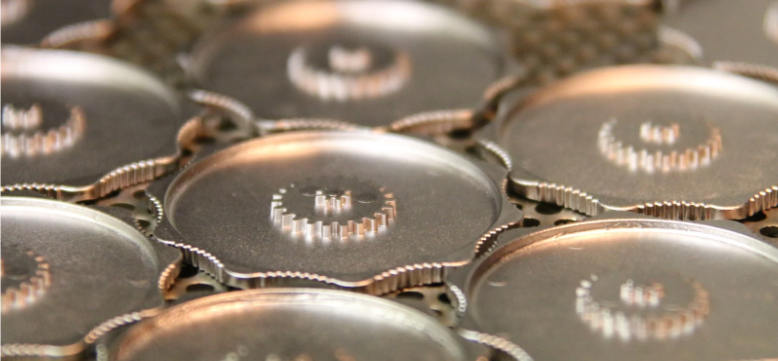
Metal Injection Molding (MIM) has emerged as one of the most versatile and cost-effective manufacturing processes for producing complex metal components at scale. MIM combines the design flexibility of plastic injection molding with the mechanical properties of wrought metals, enabling manufacturers to create complex parts that would be difficult, or impossible, to produce otherwise. However, successful MIM processing requires careful consideration of technical factors throughout the production cycle. This comprehensive guide explores the considerations for achieving optimal results in metal injection molding.
Understanding the MIM Process Flow
Metal injection molding is a multi-stage process that transforms fine metal powders into dense, high-strength components through a carefully orchestrated sequence of operations. The process begins with feedstock preparation, where fine metal powders—typically with particle sizes ranging from 4 to 25 microns—are blended with thermoplastic and wax binders in precise ratios [7]. This mixture is cooled and granulated into free-flowing pellets that can be processed using standard injection molding equipment.
The feedstock is then injected into mold cavities under high pressure, creating what is known as a “green part.” After cooling and ejection, this green part undergoes debinding to remove the binder material, resulting in a fragile “brown part.” Finally, the brown part is sintered, fused in a furnace, at high temperatures, typically between 1,200°C and 1,450°C depending on the material, causing the metal particles to fuse together and densify [3]. During sintering, parts typically shrink by 15-20% [2] as the metal particles bond, achieving a final density of 94-97% of the theoretical maximum [9].
Feedstock Preparation and Material Selection
The foundation of successful MIM processing lies in proper feedstock preparation. The powder-to-binder ratio is critical, typically ranging from 60:40 to 70:30 by volume [7]. Higher metal powder loadings result in increased part density and improved mechanical properties but can also increase material viscosity, making injection molding more challenging. The feedstock’s consistency is crucial to ensure uniform material flow during injection molding, ultimately resulting in parts with consistent properties throughout.
Material selection extends beyond just the metal powder. Common MIM materials include stainless steel, titanium alloys, nickel-based superalloys, and copper composites, each requiring specific processing parameters. The binder system, typically composed of thermoplastics like polypropylene and polyethylene, or wax and polymer blends, must be carefully selected to provide adequate flow during molding while allowing efficient removal during debinding. Binders are designed so that approximately 90% can be removed during the debinding stage, while the remaining 10% serves as a “backbone binder” to maintain the brown part’s structural integrity before sintering [12].
Design Considerations for MIM Parts
Designing components for MIM requires attention to specific guidelines that differ from both conventional metalworking and plastic injection molding. Maintaining uniform wall thickness between 1 mm and 6 mm is crucial for ensuring uniform shrinkage and minimizing warping during sintering [2]. Sections thicker than 12.5 mm should be avoided or cored out, as they can lead to non-uniform shrinkage and extended sintering times [2].
Gate location significantly influences material flow and final part quality. Gates should be positioned at the largest cross-sectional area to enable material flow from thick to thin sections. For cylindrical parts, centering the gate close to the cylinder’s axis helps prevent distortion during sintering. Four basic gate types are commonly used in MIM—tab, tunnel, jump, and drop gates—each leaving a small mark that must be considered during design.
Sharp corners are problematic in MIM as they cause stress concentrations and can lead to defects. Adding fillets and radii of 0.4–0.8 mm helps reduce stress during molding and sintering, improves material flow, and prevents premature part failure [2]. Unlike plastic injection molding, draft angles are often not necessary for MIM parts due to the use of wax as a mold release agent, though small drafts of 0.5° to 2° may be beneficial for parts with high aspect ratios [2].
Tooling and Mold Design
Mold design for MIM presents unique challenges due to the material’s properties and the significant shrinkage that occurs during sintering. Molds are typically made from hardened tool steel capable of withstanding the high pressures and temperatures involved. The cavity design must account for the 15-20% shrinkage during sintering, requiring precise calculations to ensure final part dimensions meet specifications [2].
Ejector pins are essential for removing parts from the mold cavity but leave witness marks on the part surface. These marks should be positioned in non-functional or hidden areas, or sleeve ejection methods should be used to minimize their visibility. When undercuts are required, cam actions enable their formation without secondary operations, though each cam action occupies significant space within the tool and adds complexity to the design.
Debinding: The Critical Transition
Debinding is one of the most critical and challenging stages in the MIM process. This step removes the binder material that holds the metal powder particles together in the green part, preparing it for sintering. Binder removal is typically accomplished through multiple methods, with solvent debinding being the most popular approach.
In solvent debinding, parts are immersed in a solvent bath that dissolves the soluble binder components. Catalytic debinding uses chemical catalysts to decompose the binder without disturbing part geometry. Thermal debinding involves slowly heating the part in a controlled atmosphere furnace to remove remaining binder through thermal decomposition. This step must be carefully managed to prevent defects such as cracking or warping due to rapid binder removal.
The debinding process directly affects binder residue in the blank. If debinding is incomplete, excessive binder remains, which decomposes and vaporizes during sintering, potentially causing part failure. Conversely, excessive debinding can cause metal oxidation and structural deformation. Temperature profiles, atmosphere composition, and timing must be precisely controlled to achieve optimal results.
Sintering: Achieving Final Properties
Sintering transforms the fragile brown part into a dense, high-strength metal component. During this process, parts are heated to temperatures near the metal’s melting point in a protective atmosphere—typically vacuum, inert gas, or hydrogen—causing metal particles to fuse through solid-state diffusion. MIM parts are often sintered using liquid phase sintering, where temperatures are high enough to induce partial melting, accelerating densification.
Controlling shrinkage during sintering represents a core technical challenge. Different materials exhibit different shrinkage rates, generally between 15% and 18%, requiring careful control of sintering time, temperature, and other parameters [10]. Part geometry also affects shrinkage, with overhanging features creating particular difficulties. Designers should specify flat areas for setting parts during sintering to reduce the cost of setting materials and minimize distortion.
Tolerance and Quality Considerations
Metal injection molding typically achieves tolerances of ±0.3% of the dimension or ±0.08 mm, whichever is greater [3]. For small dimensions, the ±0.08 mm tolerance becomes the governing factor, while for larger dimensions, the percentage-based tolerance applies. These tolerances are achievable in the as-sintered condition, though parts requiring tighter specifications may need post-sintering machining.
Quality control must address potential defects at each process stage. Internal defects like porosity, voids, or micro-cracks can occur during injection and sintering. Industrial CT scanning has emerged as a valuable tool for non-destructive inspection, providing detailed insights into internal structures and enabling process optimization. Strategic sensor placement and process monitoring ensure consistent quality throughout production.
Economic and Application Considerations
MIM is ideally suited for parts under 100 grams, though it has been used successfully for components up to 453 grams [6]. The process excels at producing complex geometries in high volumes, with cost advantages becoming more pronounced as part complexity increases. Initial investment in tooling and equipment is substantial, making MIM most economical for production volumes above several thousand parts annually.
The technology finds applications across diverse industries including automotive, aerospace, medical devices, and consumer electronics. Its ability to produce complex shapes with excellent mechanical properties makes it particularly valuable for applications requiring miniaturization, precision, and high performance.
Successful metal injection molding requires comprehensive understanding of the entire process chain, from feedstock preparation through final sintering. By carefully considering material selection, part design, tooling requirements, debinding parameters, and sintering conditions, manufacturers can harness MIM’s full potential to produce complex, high-quality metal components cost-effectively. As the technology continues to evolve with improved materials, processing techniques, and quality control methods, MIM will remain an essential manufacturing process for producing the next generation of precision metal components.
PTI Tech is a U.S.-based advanced manufacturing company specializing in injection molding of plastics and metals, additive manufacturing, and in-house tooling. Serving defense, aerospace, medical, and industrial markets, PTI Tech combines innovation, engineering, technology, and vision to deliver mission-critical solutions that are 100% American-made. Contact PTI if interested in use of metal injection molding for your business.
References
[1] Xometry, “All About Metal Injection Molding (MIM),” Sep. 11, 2025. [Online]. Available: https://www.xometry.com/resources/injection-molding/metal-injection-molding/
[2] CADmore, “Designing for Metal Injection Molding,” Jan. 8, 2025. [Online]. Available: https://cadmore.com/blog/designing-for-metal-injection-molding
[3] Unionfab, “Metal Injection Molding (MIM): A Complete Guide,” Sep. 30, 2024. [Online]. Available: https://www.unionfab.com/blog/2024/09/metal-injection-molding
[4] Proleantech, “Metal Injection Molding (MIM): A Complete Guide,” Sep. 13, 2024. [Online]. Available: https://proleantech.com/metal-injection-molding-guide/
[5] Lumafield, “Manufacturing Process: Metal Injection Molding (MIM),” Jul. 24, 2025. [Online]. Available: https://www.lumafield.com/article/manufacturing-process-metal-injection-molding-mim
[6] HLH Rapid, “Metal Injection Moulding (MIM) Process Guide,” Feb. 19, 2024. [Online]. Available: https://hlhrapid.com/knowledge/metal-injection-moulding-mim-process-guide/
[7] Wevolver, “An Advanced Guide to Metal Injection Molding,” May 24, 2023. [Online]. Available: https://www.wevolver.com/article/metal-injection-moulding
[8] Nexa3D, “Metal Injection Molding: What It Is & Top Alternatives [2024],” Feb. 5, 2024. [Online]. Available: https://nexa3d.com/blog/metal-injection-molding/
[9] Advanced Powder Products, “Metal Injection Molding Design Guide.” [Online]. Available: https://advancedpowderproducts.com/metal-injection-molding-design-guide
[10] SIMUWU Vacuum Furnace, “Debinding and sintering of metal injection molding components.” [Online]. Available: https://www.vacfurnace.com/technology-frontiers/debinding-and-sintering-of-metal-injection-molding-components/
[11] Carbolite, “Metal Injection Moulding (MIM) Debinding furnace.” [Online]. Available: https://www.carbolite.com/products/metal-injection-moulding-mim/
[12] PIM International, “A tooling experts ‘primer’ on Metal Injection Moulding: What technology newcomers need to know,” Jan. 21, 2025. [Online]. Available: https://www.pim-international.com/articles/a-tooling-experts-primer-on-metal-injection-moulding-what-technology-newcomers-need-to-know/
[13] A. Tiwari et al., “High‐performance PPS/PEEK blend and its composites with milled carbon fiber: Study on their mechanical, thermal and dielectric properties,” Polymer Composites, Jun. 7, 2024. [Online]. Available: https://4spepublications.onlinelibrary.wiley.com/doi/10.1002/pc.28603?af=R
[14] ScienceDirect, “Debinding and sintering of metal injection molding (MIM) components,” May 24, 2019. [Online]. Available: https://www.sciencedirect.com/science/article/abs/pii/B978008102152100009X
[15] https://www.psmindustries.com/blog/advantages-of-metal-injection-molding
[16] https://get-it-made.co.uk/services/metal-injection-moulding