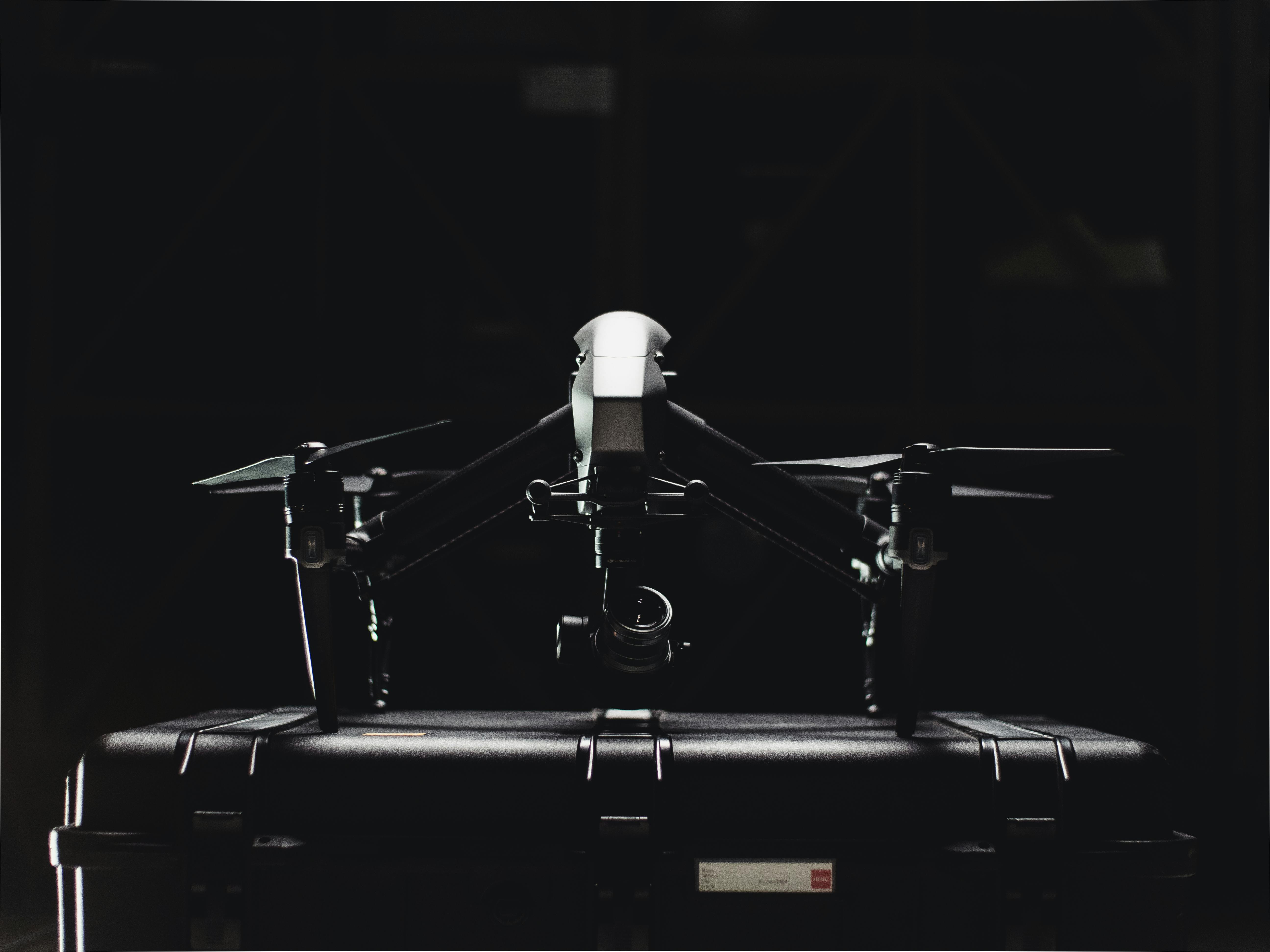

The unmanned aerial vehicle (UAV) industry is experiencing a materials revolution as engineering-grade polymers are outperforming traditional metals in critical applications. The global composite material drone market is valued at $1.85 billion in 2024 and is projected to reach $4.81 billion by 2031, exhibiting a compound annual growth rate of 16.5% [1]. The shift toward advanced polymers represents more than just a materials substitution—it shows a transformation in how UAVs are designed, manufactured, and deployed. As the traditional aluminum and titanium alloys’ limitations become apparent in meeting the demands of next-generation aerial platforms; high-performance polymers are emerging as the materials of choice for applications ranging from military surveillance drones to commercial delivery systems.
The Limitations of Traditional Metals in UAV Design
The evolution of UAV design has long been constrained by the inherent limitations of conventional metallic materials. Aluminum alloy 7075, widely utilized in legacy platforms like the F-16 Fighting Falcon, offers commendable strength but proves prone to fatigue and corrosion when exposed to extreme flight conditions. Traditional high-strength steels struggle to balance stiffness, weight reduction, and enhanced thermal management in UAV applications. Even titanium alloys, while providing excellent strength-to-weight ratios in platforms such as the F-22 Raptor, cannot achieve the design capabilities and machining complexities that modern UAV applications demand.
The weight penalties associated with metal structures directly impact the most critical performance parameters of UAVs: flight time, payload capacity, and operational range. In an industry where operators calculate costs down to the gram, every ounce of unnecessary structural weight translates to reduced mission capability. These limitations highlight the compelling need for a shift toward advanced polymers and composite materials that offer significant weight reductions and superior durability while providing the adaptability required to meet extreme operational demands.
High-Performance Polymers: The New Standard
The transition to engineering-grade polymers for UAV applications centers on a family of ultra-high-performance thermoplastics that deliver exceptional mechanical properties while maintaining significantly lower weight than metal alternatives. Polyetheretherketone (PEEK) has emerged as the gold standard for demanding aerospace applications, known for its high strength-to-weight ratio and ability to maintain mechanical properties at elevated temperatures up to 480°F (249°C) [13]. PEEK exhibits excellent chemical resistance, allowing it to withstand exposure to fuels, oils, cleaning agents, and harsh environmental conditions while maintaining structural integrity.
The material’s continuous use temperature of 260°C (500°F), combined with its V-0 flammability rating and low smoke emission characteristics, makes PEEK particularly valuable for UAV components that must meet safety standards [17]. Operators can achieve weight savings up to 60% when converting metallic components to PEEK, translating to lower fuel costs, reduced emissions, and extended flight ranges—critical advantages in both military and commercial UAV operations [17].
Polyetherketoneketone (PEKK) represents an evolution beyond traditional PEEK, offering enhanced properties in specific areas critical to UAV performance. PEKK provides superior compressive strength, making it ideal for components subjected to pressure, impact, or crushing forces such as motor mounts, landing gear, and structural brackets. With a maximum operating temperature around 260°C—slightly higher than PEEK—and a slower crystallization rate that enables more tunable processing conditions, PEKK offers greater versatility during manufacturing [11]. Recent developments include the launch of high-performance 3D printing PEKK filaments in October 2024, providing better dimensional stability and higher Z-axis strength compared to PEI or PEEK alternatives.
Polyetherimide (PEI), marketed under trade names like ULTEM, offers similar characteristics to PEEK with excellent high dielectric strength, making it particularly valuable for electrical insulation in UAV propulsion systems and avionics. Aurora Flight Sciences demonstrated ULTEM’s potential by developing the world’s first jet-powered, 3D-printed UAV using a polyetherimide matrix, showcasing the material’s viability for next-generation aerial platforms.
Composite Materials: Amplifying Performance
The combination of reinforcing fibers with engineering-grade polymers creates composite materials that amplify the already impressive properties of base polymers. Carbon fiber reinforced polymers (CFRP) and glass fiber reinforced polymers (GFRP) provide high structural integrity with minimal weight, allowing extended operational range and payload capacity. These composites have become indispensable in UAV manufacturing, with CFRP dominating the market due to its superior strength-to-weight ratio.
Carbon nanotube-reinforced epoxy composites, utilized in platforms like the MQ-9 Reaper, significantly extend flight endurance by reducing drag and maintenance requirements. Advanced PPS/PEEK blend composites with milled carbon fiber demonstrate exceptional mechanical, thermal, and dielectric properties that exceed what either polymer could achieve independently. The development of continuous fiber additive manufacturing techniques enables the creation of complex lattice structures with optimized strength-to-weight ratios, allowing engineers to achieve performance levels previously impossible with traditional manufacturing methods.
Fiber-reinforced polymer composites manufactured using both conventional and advanced techniques have enabled the construction of innovative hybrid UAV designs with integrated vertical takeoff and landing (VTOL) capabilities. These advanced materials support aerodynamic configurations optimized for cruise speeds while maintaining the structural integrity required for demanding mission profiles, including extended flight autonomy exceeding three hours.

Manufacturing Transformation Through Additive Technologies
The manufacturing model for UAV components has been transformed by additive manufacturing technologies that fully exploit the capabilities of engineering-grade polymers. Unlike traditional manufacturing methods such as CNC machining and injection molding that can drag down production times and add supply chain inefficiencies, 3D printing enables rapid iteration and customization while reducing tooling requirements and accelerating time-to-market.
Fused filament fabrication (FFF) has emerged as the most accessible additive manufacturing technology for UAV applications, with materials like polylactic acid (PLA) and lightweight PLA (LW-PLA) enabling cost-effective prototyping and even production of functional components. Advanced thermoplastics including PEEK, PEKK, and ULTEM can be processed through FFF with appropriate equipment featuring heated chambers and specialized extruders capable of reaching the required processing temperatures of 340-360°C for PEKK and higher for PEEK [8].
Selective Absorption Fusion (SAF) and other powder bed technologies enable the production of complex geometries with excellent surface finish and mechanical properties suitable for end-use parts. These technologies support the fabrication of lattice structures inside wings, landing gear, and airframes themselves, enabling engineers to achieve exceptional strength-to-weight ratios using materials like PA-12 Nylon. The design freedom enabled by additive manufacturing allows for topology optimization and generative design approaches that would be impossible to manufacture using conventional methods.
Current Applications and Market Dynamics
Engineering-grade polymers have found applications across the complete spectrum of UAV components and systems. Frame components, motor mounts, and propeller blades benefit from the lightweight strength of PEEK and PEKK materials. Electrical insulation systems leverage the excellent dielectric properties of PEI and PEEK to protect sensitive electronics and provide isolation in propulsion systems. Enclosures and housings manufactured from these materials provide environmental protection while minimizing weight penalties.
The military drone market, valued at over $12 billion in 2024, increasingly utilizes advanced polymer composites, particularly for medium-altitude long-endurance (MALE) and high-altitude long-endurance (HALE) platforms [1]. Recent contracts for next-generation surveillance drones have specified composite material requirements in over 75% of technical specifications, reflecting their operational advantages in mission-critical applications [1]. Commercial UAV applications in precision agriculture, infrastructure inspection, aerial photography, and last-mile delivery are driving additional demand for lightweight, durable polymer-based structures.
The competitive landscape features major materials suppliers including DuPont, BASF, and specialized companies like Arkema developing advanced PAEK materials specifically for aerospace applications. DJI dominates the commercial drone sector with over 30% market share in 2024, leveraging carbon fiber composite construction in platforms like the Mavic 3 series to combine lightweight design with exceptional durability [1].
The Future of Polymer-Based UAV Manufacturing
The trajectory for engineering-grade polymers in UAV applications points toward even greater sophistication and capability. The development of 4D printing technology, which enables materials to respond to environmental stimuli through shape-memory polymers, self-healing composites, and adaptive structures, represents the next frontier. These smart materials could enable UAVs with morphing wings that optimize aerodynamics across different flight regimes, adaptive solar panels that track the sun throughout flight, and self-healing structures that repair minor damage autonomously.
Nanocomposite filaments offer opportunities for enhancing multifunctionality, enabling thermal and electrical conductivity as well as in-situ sensing capabilities that could dramatically expand UAV performance. The integration of embedded electronics and functional features within polymer composite structures will enable more compact, capable systems with reduced assembly complexity.
Sustainability considerations are driving research into bio-based high-performance polymers and improved recycling processes for composite materials. As manufacturing volumes increase and production techniques become more automated through AI-based design optimization and scalable production methods, the cost advantages of polymer-based UAV components will become even more compelling.
Engineering-grade polymers have transcended their role as metal substitutes to become enabling technologies that define what is possible in modern UAV design. The combination of exceptional mechanical properties, dramatic weight savings, design flexibility, and advanced manufacturing compatibility positions materials like PEEK, PEKK, and fiber-reinforced composites at the center of UAV innovation. As the technology continues to mature and new applications emerge, manufacturers who master the selection, processing, and optimization of these advanced materials will lead the next generation of aerial platform development. The future of UAV manufacturing is lightweight, durable, and increasingly intelligent—built on the foundation of engineering-grade polymers that continue to push the boundaries of aerospace performance.
PTI Tech is a U.S.-based advanced manufacturing company specializing in injection molding of plastics and metals, additive manufacturing, and in-house tooling. Serving defense, aerospace, medical, and industrial markets, PTI Tech combines innovation, engineering, technology, and vision to deliver mission-critical solutions that are 100% American-made. Contact PTI if interested in a competitive partner for manufacturing polymer-based UAVs.
References
[1] Intel Market Research, “Composite Material Drone Market Outlook 2025-2032.” [Online]. Available: https://www.intelmarketresearch.com/composite-material-drone-2025-2032-460-4878
[2] Engineering.com, “How additive manufacturing benefits UAV design,” Apr. 15, 2025. [Online]. Available: https://www.engineering.com/how-additive-manufacturing-benefits-uav-design/
[3] MDPI, “Investigating Additive Manufacturing Possibilities for an Unmanned Aerial Vehicle with Polymeric Materials,” 2024. [Online]. Available: https://pmc.ncbi.nlm.nih.gov/articles/PMC11435237/
[4] MDPI, “Innovative Hybrid UAV Design, Development, and Manufacture for Forest Preservation and Acoustic Surveillance,” Apr. 10, 2024. [Online]. Available: https://www.mdpi.com/2411-5134/9/2/39
[5] Markets and Markets, “Unmanned Composites Market Size, Share, Trends and Growth By 2035.” [Online]. Available: https://www.marketsandmarkets.com/Market-Reports/unmanned-system-composite-market-242948844.html
[6] ScienceDirect, “Unmanned aerial vehicle (UAV) manufacturing materials: Synthesis, spectroscopic characterization and dynamic mechanical analysis (DMA),” Oct. 11, 2019. [Online]. Available: https://www.sciencedirect.com/science/article/abs/pii/S0022286019313201
[7] Stratasys, “White Paper How 3D Printing of Drones and UAVs Meet Commercial Applications,” 2024. [Online]. Available: https://www.tritech3d.co.uk/app/uploads/2024/09/Tri-Tech-3D-Solution-Guide-for-Drone-UAV-Applications.pdf
[8] Engineering.com, “Why aerospace needs 3D printed thermoplastics like PEEK, PEKK and ULTEM,” Mar. 24, 2025. [Online]. Available: https://www.engineering.com/why-aerospace-needs-3d-printed-thermoplastics-like-peek-pekk-and-ultem/
[9] AIP Precision Machining, “How Advanced Polymers Are Revolutionizing Aerospace Applications,” Sep. 13, 2024. [Online]. Available: https://aipprecision.com/how-advanced-polymers-revolutionize-aerospace-applications/
[10] Market Research Reports, “Global Polyetheretherketone (PEEK) for Drone Market Research Report 2024.” [Online]. Available: https://www.marketresearchreports.com/mrrpb5/global-polyetheretherketone-peek-drone-market-research-report-2024
[11] American Additive Manufacturing, “Pekk vs Peek: Key Differences in Aerospace Materials,” 2024. [Online]. Available: https://www.americanadditive.com/post/pekk-vs-peek
[12] The News, “Aerospace leap,” May 23, 2025. [Online]. Available: https://www.thenews.com.pk/print/1314259-aerospace-leap
[13] AIP Precision Machining, “The Advantages of PEEK Thermal properties in Aerospace Applications,” Jan. 17, 2022. [Online]. Available: https://aipprecision.com/the-advantages-of-peek-thermal-properties-in-aerospace-applications/
[14] Valuates Reports, “Polyetheretherketone (PEEK) for Drone Market, Report Size, Worth, Revenue, Growth, Industry Value, Share 2025.” [Online]. Available: https://reports.valuates.com/market-reports/QYRE-Auto-26Y15212/global-polyetheretherketone-peek-for-drone
[15] Arkema High Performance Polymers, “IEMAI3D launches high-performance 3D printing PEKK material in China,” Oct. 2024. [Online]. Available: https://hpp.arkema.com/en/resources/post/hpp/hhp.arkema/high-performance-pekk-3d-printing-product-launch-china/
[16] Drake Plastics, “Aerospace Applications for Torlon & PEEK,” Sep. 26, 2024. [Online]. Available: https://drakeplastics.com/aerospace/
[17] Performance Plastics, “PEEK® for Aerospace/Defense Applications,” Sep. 28, 2022. [Online]. Available: https://performanceplastics.com/blog/peek-for-aerospace-defense-applications/
[18] Frontiers in Materials, “The rise of aerial additive manufacturing in construction: a review of material advancements,” Nov. 18, 2024. [Online]. Available: https://www.frontiersin.org/journals/materials/articles/10.3389/fmats.2024.1458752/full
[19] https://images.pexels.com/photos/997130/pexels-photo-997130.jpeg

[20] https://images.pexels.com/photos/2050718/pexels-photo-2050718.jpeg